Mirak
A highland village above the upper Kasagh, on the northern slopes of Aragats
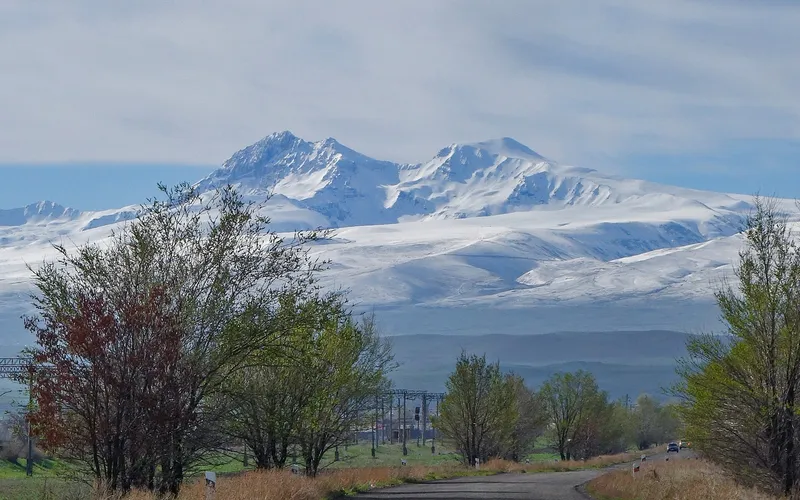
Mirak is a small mountain village in the Aragatsotn Province of Armenia, set at an altitude of about 2,025 metres above sea level in the northern part of the marz, in the upper basin of the Kasagh River. It is a quiet, sparsely populated settlement roughly 37 kilometres north-north-west of Ashtarak, the provincial centre.
What is this place
Mirak is a small mountain village in the Aragatsotn Province of Armenia, set at an altitude of about 2,025 metres above sea level in the northern part of the marz, in the upper basin of the Kasagh River. It is a quiet, sparsely populated settlement roughly 37 kilometres north-north-west of Ashtarak, the provincial centre.
The village spreads across a broad volcanic plateau on the northern slopes of Aragats, the highest mountain in Armenia. The surroundings of Mirak are a typical landscape of the high Aragatsotn country: open grassy slopes, stony ridges and wide horizons over which the massif of Aragats rises. The altitude of more than two thousand metres shapes everything here — a short, cool summer, a long, snowy winter and the thin air of the heights.
The climate of Mirak is moderately cold and humid. The mean annual air temperature is about 4.4 °C; in January, the coldest month, it averages around −7.4 °C, while August, the warmest, reaches only 15.6 °C. The village receives roughly 548 mm of precipitation a year, most of it falling in May. This regime, with cool summers and snowy winters, is characteristic of the mountain villages of this part of the province and gives rise to an unhurried way of life closely tied to the turning of the seasons.
The economy of Mirak, like that of the other highland villages of Aragatsotn, has historically rested on livestock farming and is bound up with the rich summer pastures of the surrounding slopes. At such an altitude, crop growing is limited by the short warm season, so the foundation remains the raising of animals, the cutting of hay and the use of the mountain meadows. It is a way of life worked out over centuries by the people of the Armenian highland, where nearness to the pastures and to the water of the upper Kasagh matters more than any other convenience.
Over the past century the village has lost much of its population. In the pre-war years some six hundred people lived here, whereas by the most recent figures only about 125 residents remain in Mirak. Such a contraction is the common fate of many small mountain villages in Armenia, from which the young move away to the towns and the lowland; yet those who stay keep the familiar rhythm of a highland settlement and its bond with the land and the herds.
For the traveller, Mirak is of interest above all as a point along a route through northern Aragatsotn — a country of high plateaus, springs and views of Aragats. From here it is easy to picture this harsh and beautiful part of Armenia as a whole: the road to the village runs across the upland with sweeping panoramas, and the country of the upper Kasagh is itself a place for those who value quiet, clean mountain air and unspoiled scenery far from busy tourist centres.
Mirak is a quiet corner of highland Armenia, where life still moves to the rhythm of the mountains, the pastures and the changing seasons.
Places nearby
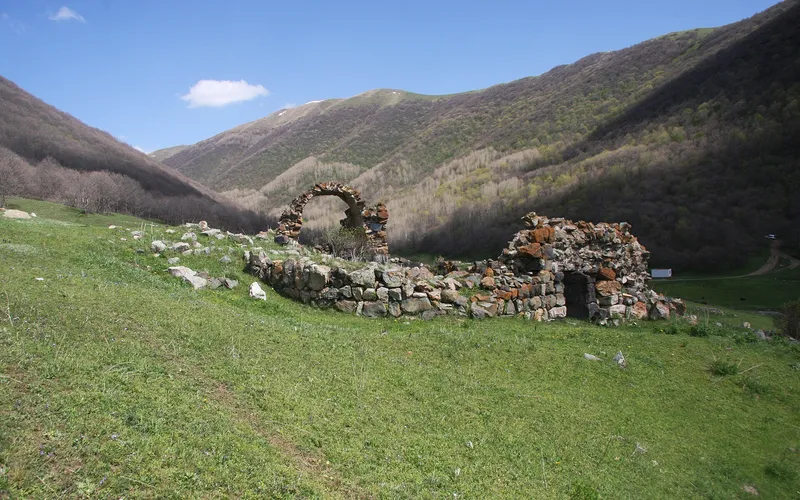
Red Monastery (Mkher Monastery)
A quiet monastic complex in the Aragatsotn highlands, known by two names and a deep sense of stillness.
Open →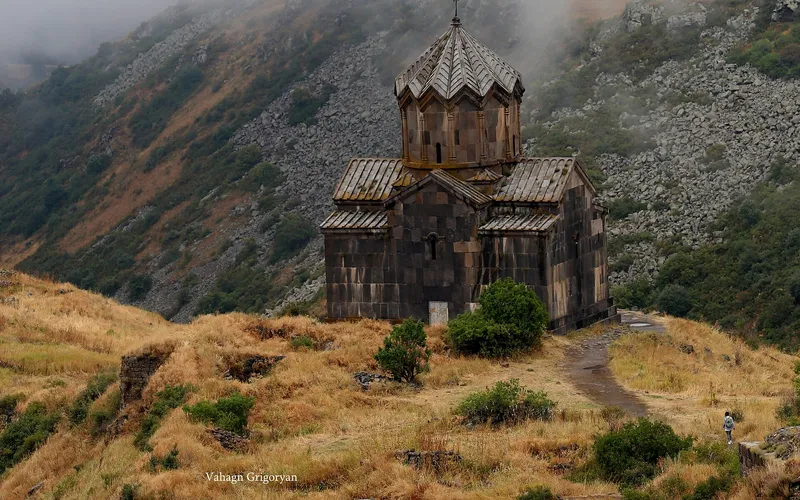
Vahramashen Church
A medieval church on the slopes of Mount Aragats, beside the ruins of the once-mighty Amberd fortress.
Open →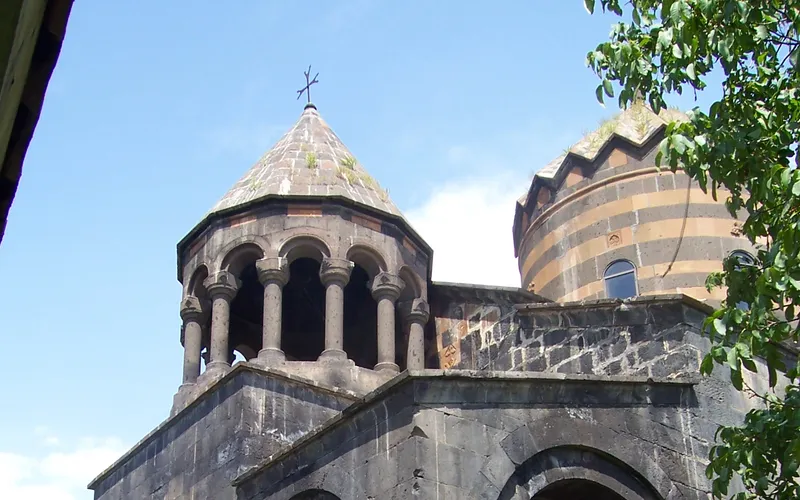
Saint Gevorg Monastery of Mughni
A handsome monastery in the village of Mughni, famous for its banded stonework and richly decorated facade.
Open →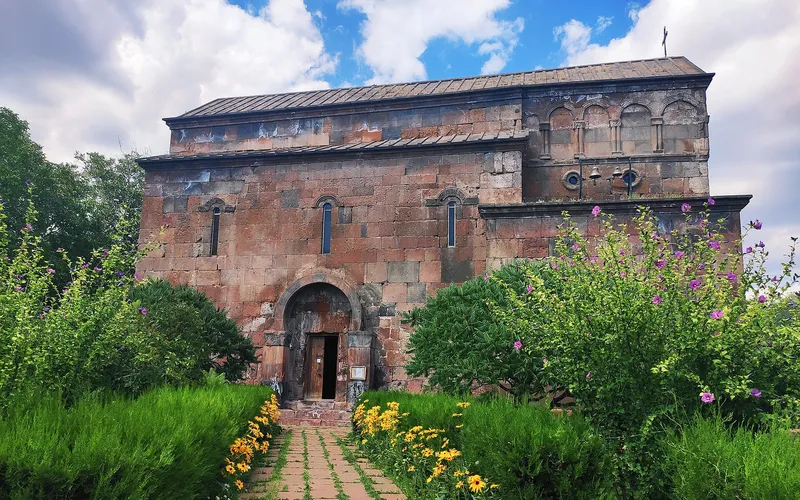
Surb Hovhannes Church of Byurakan
A historic church in the village of Byurakan on the slopes of Mount Aragats, listed among Armenia's cultural heritage.
Open →Forecast for Mirak
Now, today, tomorrow, 5/7/10/14 days and a month ahead.